Blogs
My approach to oil painting
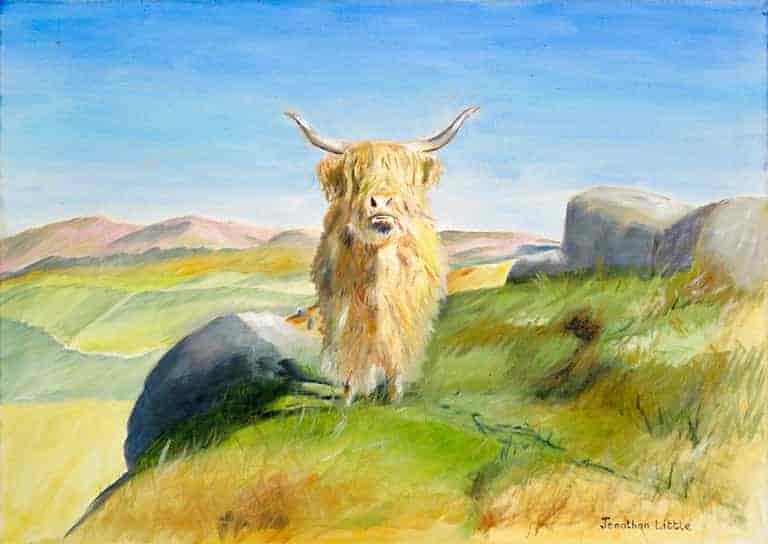
I was introduced to a limited pallet in my early teens that changed my paintings at that point in time, so having picked up my brushes again after over thirty years later, I carried on where I left off with some oil paints that must have been a Christmas present as a teenager. My first painting was of a highland cow, soon followed up with a painting ‘turning the sheep’, both of which excited me. A limited pallet means that I mix from the primary colours, red, blue and yellow to get all the colours and tones I need in a painting, with the additional help from white.

By Jonathan Little|Artist
Wed, Dec 25, 2024
Although I took early retirement to start my new career as an artist, it took over a year before I picked up my brushes. It may have been getting a career in aerospace engineering out of my system, but on reflection it may have also been fear of failure. At school, art was the only subject I excelled in, and one a felt I didn’t need to try as it came natural to me, and the one subject I always enjoyed. What if after not practicing it for many years I couldn’t do it? I can still feel nervous about a painting, but remind myself my artwork is for me and it’s a bonus if others like it. I find I need quality time, to not be anxious about anything but have a clear head to be in the moment, and enjoy the process that I know art gives me. All my artwork is for me, to improve my process and techniques, my observation and live in the moment. I take inspiration from a quote from Vincent Van Gogh “if you hear a voice within you say, ‘you cannot paint’, then by all means paint and that voice will be silenced’.
My art journey in the last three years have developed to now only using professional quality materials in all aspects of art. For oil paintings, I have switched to Michael Harding oil paints on Jackson’s premium linen canvas. The professional oil paints have made a big difference to my mixing with stronger pigments and a creamer texture to mix. I get excited just loading my pallet with colour. The painting ‘View towards Embsay from Sharp Haw’ was my first painting using professional quality paint, and was a joy to paint using the stronger pigments in mixing the colours I desired.
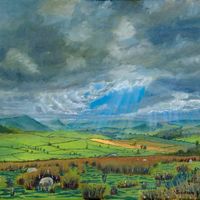
I have also learned that to achieve the colours that I want across a variety of subjects I need to extend my primary colours to then select a limited pallet from so that I now have eighteens colours that I select six or seven from on my limited pallet. The painting ‘Late sunshine on frost’ is an example where I needed to purchase additional blues to achieve the colour of the sky that I desired. Experience comes from the process, learning how the different colours behave and what tones can be achieved from them.
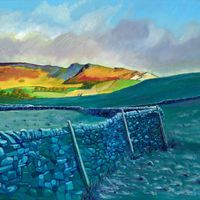
I have also experimented with brushes and pallet knives. I think in a way you are the sum of all your experiences. From my engineering experience there are two ways to create a shape on a lathe, generating or forming. Generating is using a single point tool which is moved to create a shape as opposed to forming where a tool is ground to the required shape and then plunged into the material so the material takes on the shape of the forming tool. Similary, I can use the point of a brush to create the shapes that I want, or use shapes by the type of brush or by twisting it into different positions to create a shape. For example, the painting of Rylstone Crag utilised a fan shape brush for the foreground of heather and grass, and a pallet knife on its side for the line course straight grass often found on the moors. Similary, I keep old tired brushes that are good for painting random features.
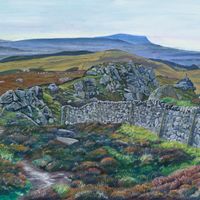
The beauty of art lies in its ever-evolving nature - a journey of discovery where there is always something new to explore and experiment with. The process is as rewarding as the outcome, offering endless opportunities to learn, grow, and gather insights that enrich future creations. It is essential for me to prioritise the process over the outcome, focusing on the journey of creation rather than the final result.